Roman’s optics beat expectations. The universe survey is still ahead.
NASA measured about 63 nanometres of optical error against a roughly 90-nanometre requirement—a commissioning result, not a new cosmic discovery.
NASA’s Nancy Grace Roman Space Telescope has passed an optical check with a result better than its team predicted. During commissioning, engineers measured lower optical error in its main camera than the mission requirement allowed.
The number is precise: Roman’s Wide Field Instrument reached about 63 nanometres of root-mean-square wavefront error, compared with a requirement of roughly 90 nanometres. NASA described the performance as nearly 30% better than predicted in its October 14 update.
That does not mean the telescope suddenly gained 30% more magnification, discovered 30% more galaxies or completed its science survey. It means the optical system performed better on a particular engineering measure while the observatory was being prepared for its work.
A space telescope still needs a remarkably delicate adjustment
Roman launched on August 30, and commissioning has involved waking up instruments, checking their behaviour and aligning the telescope. The Wide Field Instrument was activated in September. Its 18 detectors are each roughly the size of a sticky note.
The checks covered electronics, the element wheel, filters, calibration lights and thermal performance. Those tasks help establish that the instrument can work consistently under the conditions it will face in space, rather than merely switching on successfully once.
The telescope also had to move away from the deliberately unfocused position used for launch. Engineers refined the alignment in tiny increments. NASA compared one secondary-mirror adjustment with about one-sixteenth of the diameter of a human hair.
Why nanometres matter to an enormous survey
A wavefront-error measurement describes how closely light passing through the optical system matches the intended shape. Lower error can improve the quality and consistency of the images delivered to an instrument.
Roman is intended to measure vast numbers of astronomical objects, including the subtle shapes of distant galaxies. Small optical imperfections can complicate those measurements. A carefully characterised instrument is essential when the scientific signal is much less dramatic than the colourful pictures people often associate with space telescopes.
The result is therefore valuable because it improves confidence in the observatory’s readiness. It is not, on its own, a finding about the nature of dark matter or dark energy. Those questions require observations, analysis and checks for other sources of uncertainty.
A second instrument is also being prepared
Roman carries a Coronagraph Instrument designed to demonstrate technologies for suppressing starlight so that much fainter surroundings can be studied. NASA’s update said its initial slight defocus had been corrected to meet requirements.
Further work includes calibrating deformable mirrors and demonstrating the light-blocking system. Those were upcoming commissioning steps in the October 14 account, not a completed catalogue of newly imaged planets.
The two instruments serve different purposes. The Wide Field Instrument is central to Roman’s broad survey capability, while the coronagraph is a technology demonstration. Their progress should not be collapsed into a claim that both have already finished their full scientific programmes.
Better focus is a beginning, not the final discovery
Roman’s goals include investigating the expanding universe and building a much wider statistical view of the sky. Dark energy is the name used for the phenomenon associated with the accelerating expansion of the universe; a sharper telescope does not automatically explain its underlying cause.
What the commissioning update does establish is more practical and immediately useful: the main instrument is working, engineers have refined the telescope’s alignment and a key optical measurement beat the expected level.
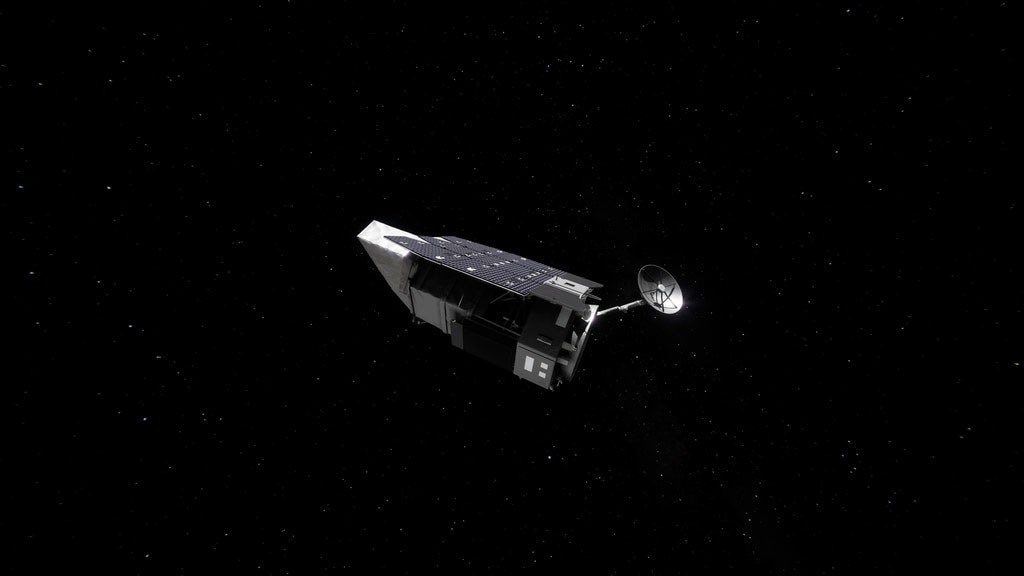
The illustration accompanying this story is an official computer-generated view of the spacecraft, not a new Roman science exposure. The next major scientific headlines will depend on what the observatory measures after these careful preparations. Before a telescope can change our picture of the universe, it has to make sure its own picture is trustworthy.