Why airplane windows have rounded corners: the small shape with a big job
The curve is not just a design choice. It helps a pressurized aircraft manage stress around openings in its fuselage.
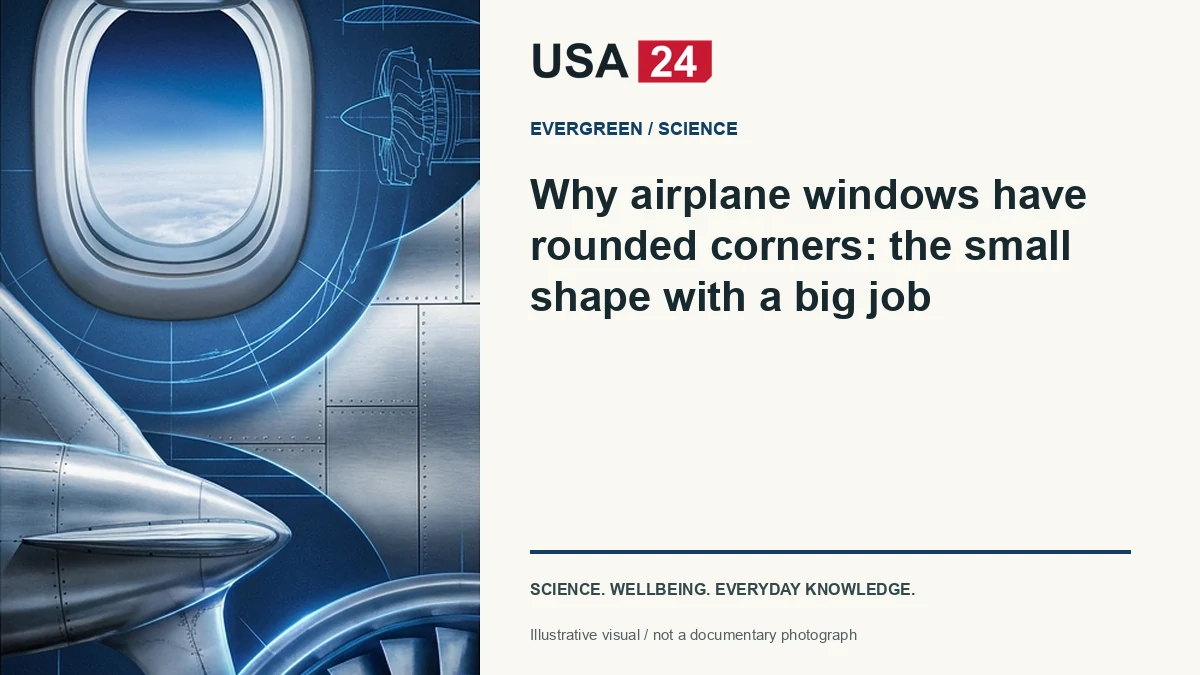
An airplane window looks like a simple frame for a spectacular view. Its rounded corners, however, are part of an engineering answer to a less visible problem: the stresses created when a cabin is pressurized.
The cabin carries a pressure difference
At cruising altitude, the cabin is kept at a higher pressure than the outside air. That pressure difference places loads on the aircraft structure. An opening interrupts the metal skin, and its geometry affects how those loads pass around it.
The Smithsonian’s How Things Fly explainer identifies sharp corners as places where stress can concentrate. Rounding those corners helps reduce the concentration; it does not make the surrounding structure load-free.
A curve is one part of a larger system
The museum describes how mid-century accidents and pressure-testing helped engineers understand the danger of stress concentrations around square openings. The lesson is broader than a preference for a particular window style: details that appear decorative can affect structural durability.
Window shape alone does not make an aircraft safe. Materials, construction, repeated-load testing, maintenance and the rest of the pressure vessel all matter. A curved opening is a design tool, not a substitute for those safeguards.
What to notice on your next flight
Look at the gentle transition between the top, sides and bottom of a passenger window. The important detail is the absence of a sharp corner, rather than whether the overall shape is perfectly circular.
That is the useful takeaway from the view: good engineering often works quietly in the background, in a curve you barely notice.