Three hearts and blue blood: how an octopus moves oxygen
Two hearts serve the gills. A third supplies the body. The unusual arrangement has a clear biological purpose.
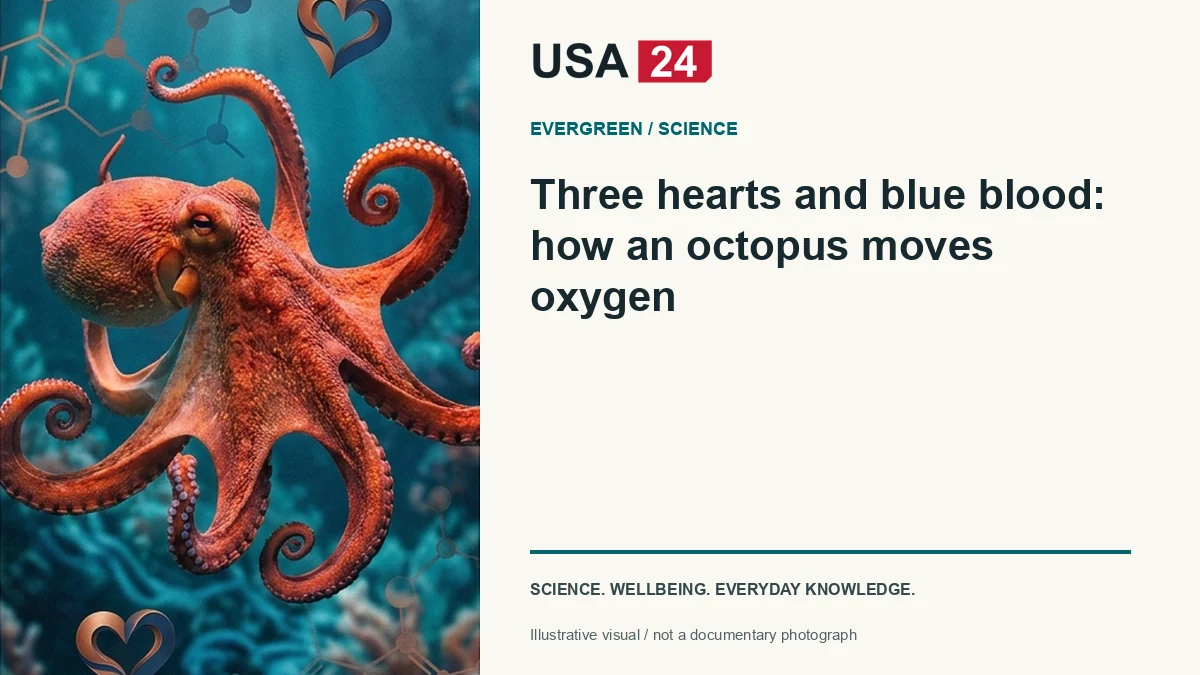
An octopus has three hearts, but they are not three interchangeable backups. The organs divide the work of circulating blood through the gills and around the body—a striking reminder that human anatomy is only one way to solve the problem of moving oxygen.
Two pumps for the gills, one for the body
Smithsonian Ocean describes two branchial hearts that send oxygen-depleted blood through the gills. A systemic heart then pumps oxygenated blood through the rest of the body.
The division is easier to understand as a route than as a trivia number: blood must reach an oxygen-exchanging surface and then deliver that oxygen to working tissues. Different hearts serve different stages of that trip.
Why the blood is blue
Humans transport oxygen using iron-containing hemoglobin. Cephalopods use a copper-based oxygen-transport system, associated with the protein hemocyanin. The chemistry gives their oxygenated blood its blue color.
Blue blood does not mean an octopus is unusually cold, artificial or poisoned. It is a feature of the oxygen carrier, not a decorative pigment added to otherwise human-like blood.
The fact is the beginning, not the whole animal
Octopuses belong to the cephalopods, a group that also includes squid and cuttlefish. Their circulatory system is one part of a very different body plan.
The best version of the three-hearts fact therefore includes a second question: what does each heart do? The answer turns an eye-catching number into an explanation of how the animal lives.