FDA flags counterfeit eye drops with bacteria. Here is what to check.
The ongoing warning identifies specific fake products and packaging clues—not all bottles sold under similar brand names.
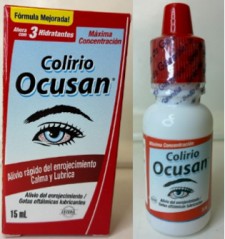
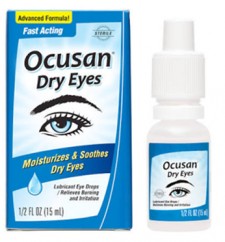
Counterfeit eye drops found in U.S. stores have tested positive for bacteria, prompting an FDA warning that consumers should stop using the identified products and seek care immediately if they develop signs of an eye infection.
The counterfeit products were found in Florida and Georgia, particularly in stores serving Spanish-speaking customers. The agency says they may also be present in Louisiana, Mississippi, North Carolina and potentially other states. That wider distribution remains under investigation; it is not a confirmed list of affected retailers in every state.
The warning concerns specific counterfeit products, not every eye drop sold under a similar brand name and not Spanish-language packaging in general. The FDA's side-by-side comparisons of authentic and counterfeit packs are the key reference for checking a bottle.
What testing found—and what has not been reported
DLC Laboratory tested two counterfeit products and found bacterial contamination. Colirio Ocusan Alivio rapido del enrojecimiento contained Staphylococcus bacteria. Ocusan Ojos Secos contained a type of bacteria that had not been confirmed in the FDA notice.
The agency says that contamination can cause serious eye infections that could lead to partial vision loss or blindness. That is a warning about potential harm, not evidence that such injuries have already occurred in this investigation.
The FDA said it was not aware of adverse events associated with the counterfeit products at the time of its notice. Product testing and the investigation were continuing, and the agency was working with distributors to identify, investigate and remove unlawful eye drops from the drug supply.
The lack of known adverse events is not a reason to keep using a suspect bottle. It describes what had been reported to the agency, while the testing results explain why consumers are being told to act before injuries are documented.
The packaging clues for the two contaminated counterfeits
The counterfeit Colirio Ocusan Alivio rapido del enrojecimiento pack identified by the FDA carries an expiration date of December 2030 and lot number 5542D12. Its bottle has a red cap, its carton and bottle use Spanish-only information, and the carton lacks a Drug Facts panel. The bottom of the carton is blank.
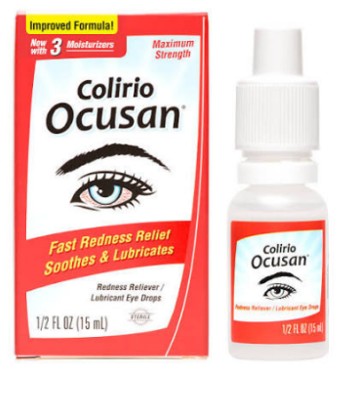
The authentic Colirio Ocusan Fast Redness Relief comparison product has a white cap, English-only information and a Drug Facts panel. Its carton carries NDC 24286-1575-1, an expiration date of September 2027 or earlier, and a barcode with “Made in Korea” on the bottom.
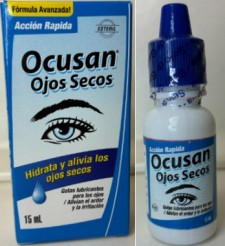
For Ocusan Ojos Secos, the identified counterfeit also carries December 2030 and lot 5542D12. It has a blue cap, Spanish-only information and no Drug Facts panel or information on the carton bottom.
The authentic Ocusan Dry Eyes comparison product has a white cap, English-only labeling, a Drug Facts panel and NDC 24286-1292-5. The FDA lists an expiration date of September 2027 or earlier, with a barcode and “Made in Korea” on the carton bottom.
These are clues for the particular comparisons in the notice. A cap color or language by itself is not a universal counterfeit test for all medicines. Consumers should compare the complete product details rather than deciding from one feature alone.
Three other counterfeit products are listed
The FDA also identifies counterfeit Colirio Manzanilla, bearing the company name ProMex LLC, with a December 2030 expiration date. Compared with the authentic Colirio Manzanill A+ Redness Reliever & Lubricant, the counterfeit lacks the word “STERILE” on the lower-left front, uses red rather than yellow lettering for “Alivia,” and has no Drug Facts panel or information on the carton bottom.
A counterfeit Manzanilla Sophia Usala Diario pack, bearing the name Laboratorios Sophia, has an expiration date of December 2030 and lot 160701DHR0. The FDA flags a red price burst reading “Precio Maximo Al Publico $33.00” and references to “Dina distribuidor naturista” on the side panel and bottle.
A fifth listed product is Manzanilla Sophia Ojo Rojo. The FDA says there is no authentic version of that product. Its description includes an October 2030 expiration date and a red carton with an image of a red eye.
The notice confirms contamination in the two tested Ocusan counterfeits; it does not say each of the other listed products produced the same laboratory result. All are included in the agency's counterfeit warning.
What consumers and retailers should do
The FDA advises consumers to stop using the identified counterfeit products immediately. Anyone with redness, discharge, pain or discomfort after using them should contact a healthcare professional or seek medical care immediately. This is not a situation in which checking packaging replaces medical attention when symptoms are present.
Consumers who see the products on shelves should not buy them and should notify the store. Retailers who suspect they hold counterfeit stock are advised to contact the company named on the product label.
Adverse events can be reported through the FDA's MedWatch program online or by calling 1-800-FDA-1088, also written as 1-800-332-1088. Health professionals are asked to inquire about all eye products used by patients who present with an infection.
Do not confuse this with a separate recall
The agency distinguishes this investigation from a September 11 recall of one lot of Colirio Manzanill A+ Redness Reliever & Lubricant by K.C. Pharmaceuticals. That recalled product has lot AR25N01 and an expiration date of November 2027.
Although PRO-MEX appears as the distributor in both contexts, the FDA says the recall is a separate issue. Combining them into a single claim would obscure which product and lot a consumer needs to check.
The warning is already in force, rather than a newly issued alert dated October 22. Its value today is practical: check the complete packaging against the official comparison, stop using an identified counterfeit and do not delay care if an eye infection may be developing.