No smell. No smoke required. The generator mistake that can turn deadly.
CDC and NHS guidance explains carbon monoxide risks, symptoms, alarms and why an open garage door is not enough.
Carbon monoxide does not have to announce itself with smoke or a smell. It is a colourless, odourless gas that can make people seriously ill or kill them. A generator running in a garage can be dangerous even when the garage door is open.
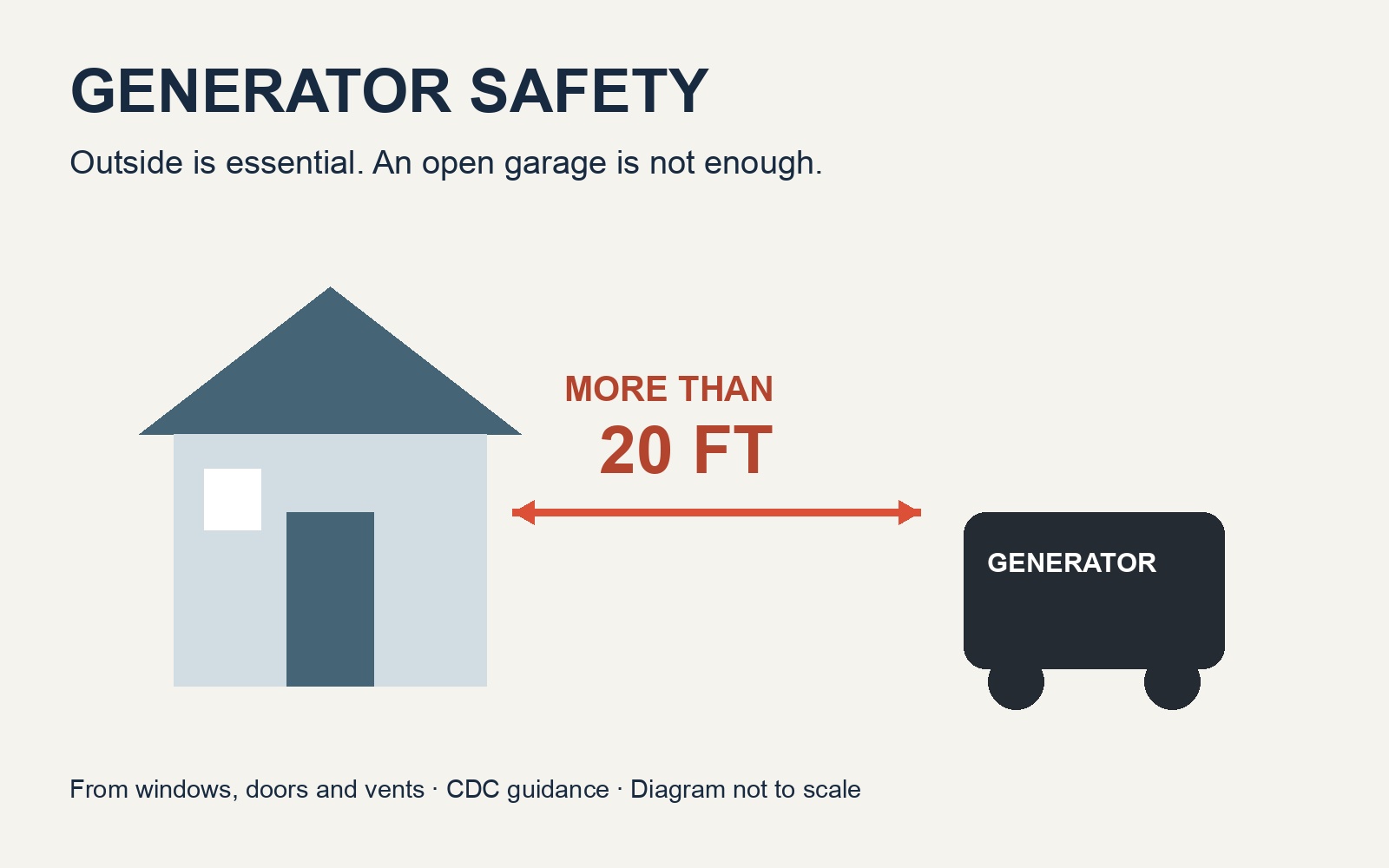
The US Centers for Disease Control and Prevention advises using portable generators outdoors, more than 20 feet from windows, doors and vents. That is a little over six metres. This is a standing safety explainer based on CDC and NHS guidance, not a report that a newly identified disaster or product recall has occurred.
The backup power mistake that matters most
A portable generator produces exhaust while burning fuel. Keeping it inside a house, garage or other enclosed area can allow carbon monoxide to build up. Opening a window or a large door does not turn the space into a safe generator location.
The CDC's instruction is to keep the generator outside and more than 20 feet away from openings through which exhaust could enter. Do not read that distance as permission to place a generator in an enclosed shed. It must also be operated according to its manufacturer's instructions and applicable local requirements.
Symptoms can look like something less alarming
CDC lists headache, dizziness, weakness, an upset stomach, vomiting, chest pain and confusion among common symptoms. People often describe the symptoms as flu-like. Someone who is asleep or impaired can become seriously affected before recognizing what is happening.
The NHS notes that symptoms may become worse inside an affected room or building and improve after leaving. That pattern is a reason to seek advice, not a home test that proves the gas is responsible. Similar symptoms can have other causes, and carbon monoxide exposure requires proper assessment rather than an online diagnosis.
If exposure is suspected, get out
NHS guidance says to go outside, seek medical advice promptly and not return to the affected building until advised it is safe. Stop using a suspected appliance only if that can be done safely; do not stay in a dangerous space trying to identify or repair the source.
In the UK, the NHS directs people with possible symptoms to NHS 111, and says to call 999 for severe problems such as breathing difficulty, sudden confusion, loss of consciousness, weakness or chest or muscle pain after suspected exposure. Do not drive yourself to hospital. In the US, call 911 for an emergency. Emergency services and qualified professionals—not an article—must determine when re-entry is safe.
Alarms are protection, not permission
CDC recommends battery-operated or battery-backup carbon monoxide detectors near sleeping areas. Follow the manufacturer's guidance for placement, testing, batteries and replacement. An alarm is not a substitute for correct installation, outdoor generator use or appliance maintenance.
UK NHS advice also recommends alarms in rooms containing fuel-burning appliances. Requirements and installation details can vary, so use the applicable local guidance rather than assume one country's wording is a complete legal specification for another.
The risk is not limited to generators
Faulty or poorly maintained boilers, furnaces, heaters and cooking equipment can produce carbon monoxide. Charcoal barbecues and camping stoves must not be used inside homes or tents. Running an engine in an enclosed area creates another potential source.
Have fuel-burning equipment maintained by a qualified professional and keep flues and ventilation clear. The practical point is not to become afraid of every appliance. It is to keep combustion gases out of occupied spaces, maintain equipment and respond quickly when an alarm or symptoms suggest something is wrong. The absence of a smell is never a reliable all-clear.
Keep the alarm and the maintenance plan separate
A household can have two different tasks: checking that its alarm works and making sure its fuel-burning equipment is safe. Completing one does not establish the other. An alarm's test function is not a professional inspection of a boiler, and a recently serviced appliance does not remove the need for a functioning alarm.
CDC recommends annual servicing of heating systems, water heaters and other gas-, oil- or coal-burning appliances by a qualified technician. NHS guidance likewise emphasizes correct installation, regular servicing and clear flues. Renters should report concerns through the relevant property and emergency channels rather than attempt repairs themselves. If poisoning is suspected, leaving and obtaining urgent advice takes priority over routine reporting or paperwork.