Witkoff called Putin a “humanitarian.” A prisoner release became a political argument.
The US envoy praised Russia’s leader after Stephen Hubbard’s release. Critics objected, while the White House defended the diplomatic context.
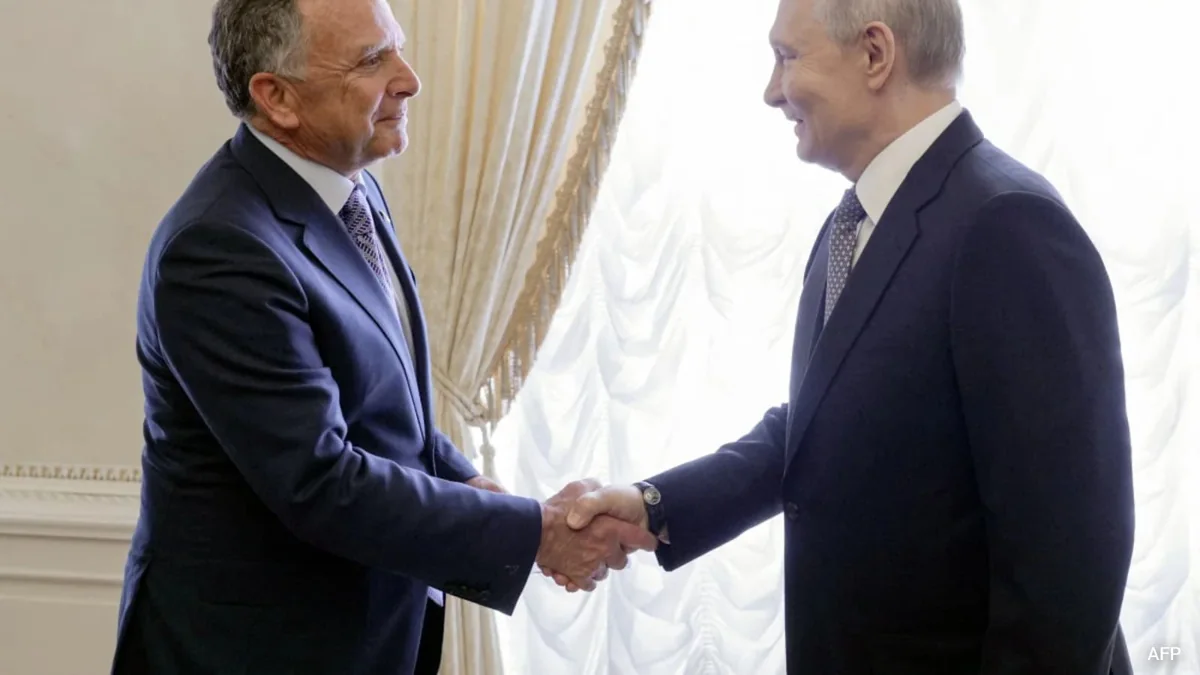
A gesture of thanks over an American prisoner’s release has opened a much larger argument about the language Washington uses toward Vladimir Putin. US envoy Steve Witkoff called the Russian president a “humanitarian,” drawing criticism from a Republican senator and a defence from Vice President JD Vance.
The remark that triggered the dispute
According to an AFP report carried by NDTV, Witkoff met Putin in St Petersburg on October 21 in connection with the release of Stephen Hubbard, an American detained after his arrest in Ukraine. Witkoff thanked the Russian leader and used the word “humanitarian” while discussing the release.
The dispute is not over whether a prisoner returning home is welcome. It is over whether praise for that particular decision can be separated from a broader assessment of Russia’s president and the war in Ukraine. Republican Senator Thom Tillis publicly challenged Witkoff’s choice of words.
Why the administration defended him
Vance argued that Witkoff was acting as a diplomat whose task was to bring an American home. His defence focused on the practical purpose of thanking someone who had released a prisoner, rather than endorsing every implication of the description.
President Donald Trump also placed the remark in the context of Hubbard’s release. AFP quoted him as allowing that it could apply to that particular act, while stopping short of offering an unqualified description of Putin. These responses matter because a short clip of the original praise leaves out the administration’s stated explanation.
A release is not a peace settlement
The Kremlin also said Russia was ready in principle to resume three-way talks involving Ukraine and the United States. Readiness in principle is not a negotiated ceasefire, an agreed summit timetable or a completed peace deal.
The episode shows how prisoner diplomacy and wartime messaging can collide. Hubbard’s release is the concrete development in the account reviewed here. The argument over Witkoff’s language is a political response to it—not evidence that the larger conflict has been resolved.