Mitsubishi Electric outlines new industrial cyber-security system
The Nozomi-based solution is planned for commercial launch in the fiscal year ending March 2028.
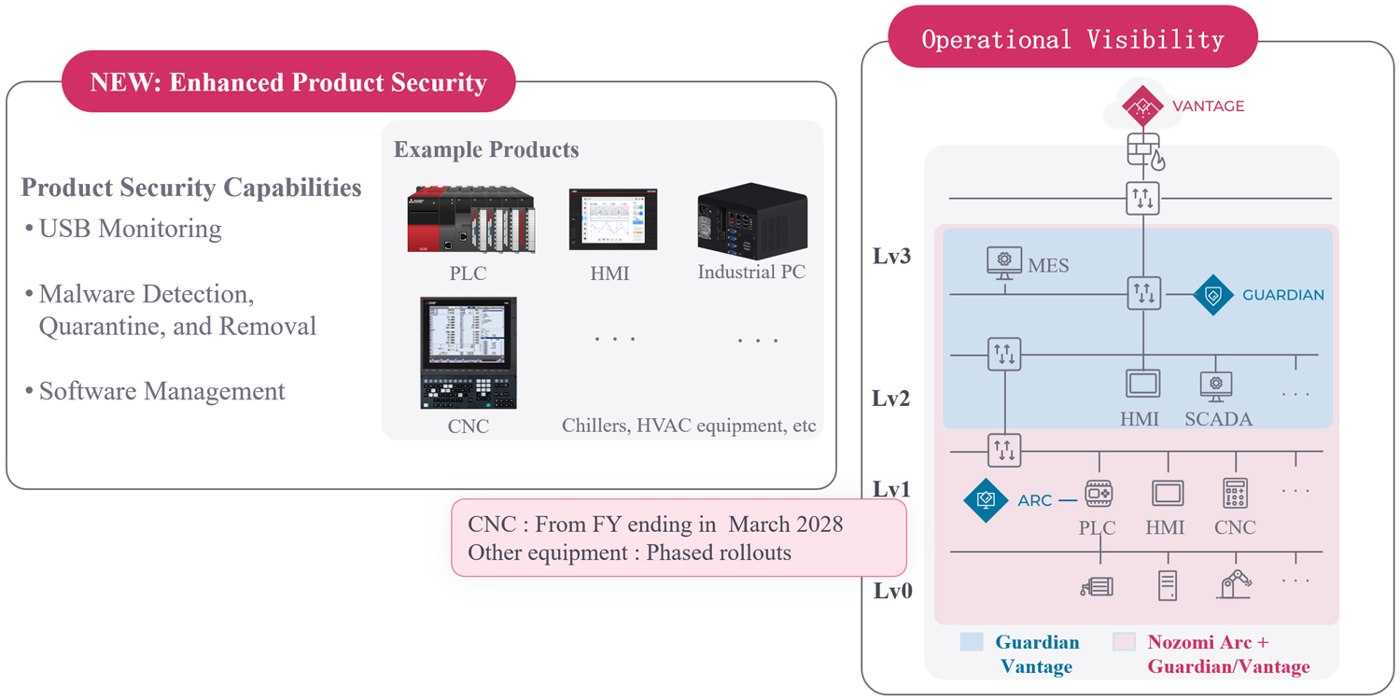
Mitsubishi Electric plans to build cybersecurity monitoring directly into industrial equipment, combining its control-system technology with tools from Nozomi Networks in a product scheduled for commercial release during the fiscal year ending March 2028.
The company announced the system on October 22 and said an initial product would appear as a reference exhibit at the Japan International Machine Tool Fair in Tokyo from October 26 to 31.
The timetable places the exhibit ahead of general commercial availability. Customers cannot assume a demonstration means a finished product is already on sale.
Monitoring at the equipment level
The proposed system would extend Nozomi Arc into equipment including Mitsubishi Electric controllers. Announced functions include USB monitoring, malware detection, software management and the isolation or removal of malicious software.
Connecting those capabilities with Nozomi’s wider visibility tools is intended to give operators a central view of devices, communications and unusual activity across a site. Mitsubishi Electric acquired Nozomi as a wholly owned subsidiary in January 2026.
The release describes planned capabilities rather than independent test results. Pricing, support for every legacy device and the amount of integration work required at a particular factory were not established in the announcement.
Why industrial security is different
Operational technology monitors and controls physical processes. Its security requirements therefore extend beyond files and accounts to the continuity and safety of machinery and facilities.
Connecting more equipment can help operators understand production, but it also makes asset visibility and communication patterns more important. A warning from a sensor is only one step: organisations still need staff, procedures and compatible systems to investigate and respond.
The company also points to increasing regulatory pressure around connected products. Using a security feature does not, on its own, prove that an entire installation satisfies every applicable requirement.
Integration could change how a site investigates an alert
An equipment-level warning becomes more useful when an operator can relate it to the rest of the facility. A central view of devices and communications could help staff distinguish an isolated machine problem from a pattern affecting several assets. That is the operational purpose behind the announced connection between embedded monitoring and Nozomi’s wider tools.
The practical questions extend beyond whether a sensor can detect suspicious activity. Operators would need to know how an alert reaches the responsible team, whether responses can interrupt production and which actions can be taken safely while machinery is running. A feature list does not answer those questions for every installation.
Mitsubishi Electric says diverse equipment in industrial environments makes it difficult to follow the status and communications of individual assets. Integrating monitoring into equipment is its proposed way to reduce that difficulty. The announcement establishes the intended architecture, while support documentation and operating experience will determine how well it works alongside existing systems. That distinction matters particularly where customers expect to retain older equipment rather than replace an entire production environment at once.
Questions ahead of launch
Mitsubishi Electric plans to extend the approach across more OT products and eventually connect it with its Serendie digital platform. Both are forward-looking plans, not completed features available across the whole product range today.
For industrial buyers, the next useful details will be supported hardware, deployment requirements, maintenance arrangements and independent evaluations. Those will show how much of the proposed visibility can be delivered in real operating conditions—and at what cost.