A chunky Jurassic squid cousin hid in a museum drawer for years.
Two Wyoming fossils revealed an unusually broad belemnite—and a lineage that survived later than researchers had thought.
Jurassic seas had a squid relative with an unusually chunky skeleton. Two fossils from Wyoming have now given it a name: Wyoteuthis linsterorum, a belemnite whose barrel-shaped internal structure is far broader than the familiar bullet-shaped fossils found around it.
The specimens are about 160 million years old. Researchers estimate the living animal was roughly 60 centimetres long, including its arms. What makes it exceptional is the thickness and shape of its preserved internal skeleton.
The species was described in Papers in Palaeontology and announced by the University of Manchester on September 10, 2026. Its story also contains a museum-drawer twist: one specimen waited for years before a second find helped researchers recognise what they had.
A familiar fossil with an unfamiliar build
Belemnites were extinct cephalopods, relatives of modern squid and octopuses. The hard, commonly preserved part is called a rostrum or guard. In Wyoming, palaeontologists sometimes call these remains “squid butts”—an informal nickname for a structure, not the animal’s scientific classification.
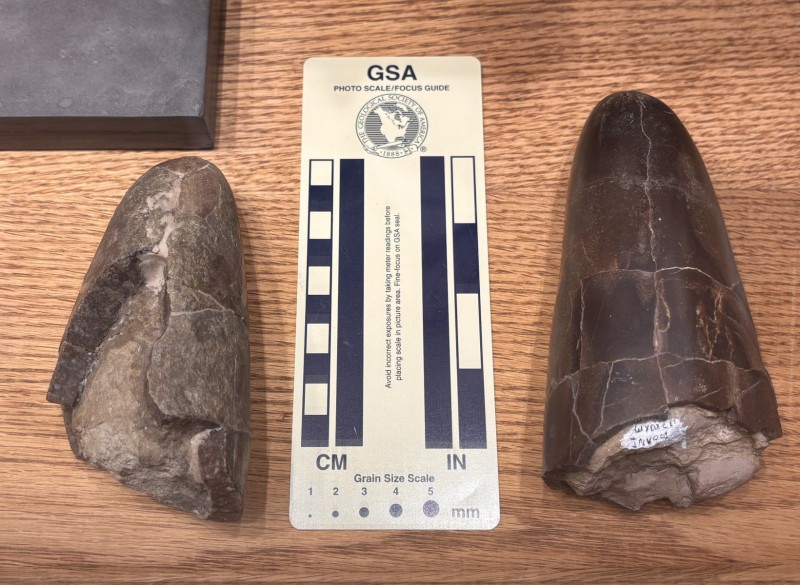
Most local examples are about five to 10 centimetres long and only one to two centimetres wide. The newly described species has a guard about 10 centimetres long but up to six centimetres wide. That combination gives it a stout, barrel-like appearance rather than the usual narrow outline.
The researchers identify it as the thickest belemnite yet recorded. That claim concerns the fossil guard, not a measurement of soft-body fat or proof that the animal was the largest squid relative ever to live. Much of its living body is reconstructed rather than preserved in these two specimens.
A surprise inside the stone
The team used computed tomography to examine the fossils internally without cutting them apart. Their internal features connected the animal to an ancient belemnite family that researchers had thought disappeared much earlier.
That makes the discovery more than a record for an unusual shape. It extends the known story of a lineage into a younger part of the fossil record. It does not mean an animal returned from extinction; it means the evidence for when its group survived has changed.
Belemnites have been studied for more than two centuries, and Wyoming’s Sundance Formation has yielded huge numbers of them. Finding such a different form within a familiar group shows why a heavily collected fossil bed can still hold surprises. Abundance does not guarantee that every uncommon species has been recognised.
The specimen that waited in a drawer
The first fossil was found in the late 1990s by Burkhard Pohl, founder of the Wyoming Dinosaur Center. It was clearly unusual, but it remained unstudied in the museum collection for years.
A second specimen was found by fossil collector Cliff Linster near Ten Sleep, Wyoming, and donated to the centre in 2019. Together, the two finds supplied the evidence needed to identify and formally describe the species. The scientific description came much later than the original act of picking a fossil out of the ground.
Wyoming palaeontologist Bill Wahl helped assemble the international team, which included Jessica Lippincott, belemnite specialist Alexey Ippolitov and Dean Lomax. The work linked local collecting and museum expertise with specialists in the United States, Britain and New Zealand.
Was the chunky build useful?
One suggested explanation is that a relatively large animal might have had an advantage hunting smaller belemnites, including Pachyteuthis found alongside it. Modern squid can prey on other cephalopods, making the idea plausible enough to investigate.
But a plausible feeding explanation is not a discovered meal. The announcement does not establish the animal’s diet from preserved stomach contents. Nor do two specimens reveal how common it was, how it moved or exactly why its guard evolved that distinctive shape.
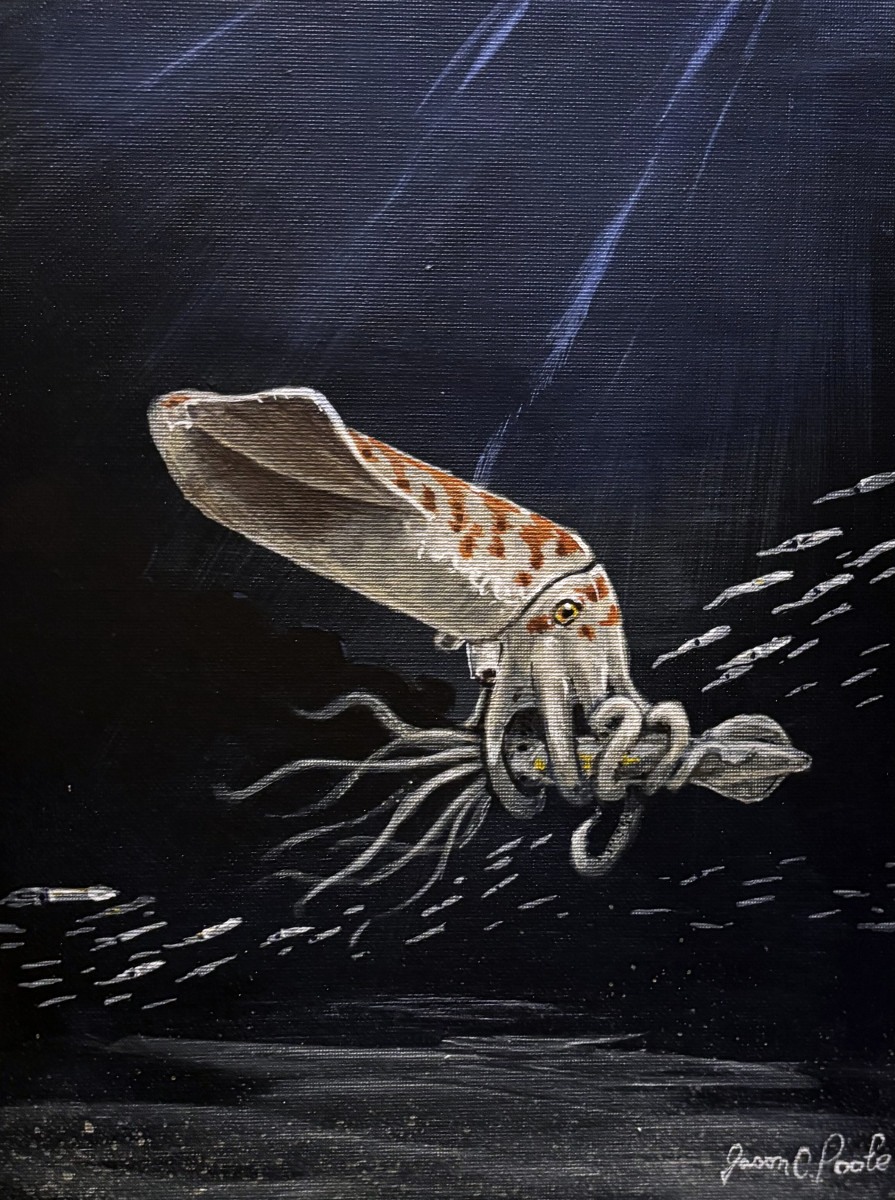
The source artwork offers an artist’s reconstruction of the living animal. Photographs of the actual specimens and a scale bar appear alongside it in the gallery. The distinction matters: the reconstruction makes the creature easier to imagine, while the fossils are the physical evidence behind the description.
A name with a human story
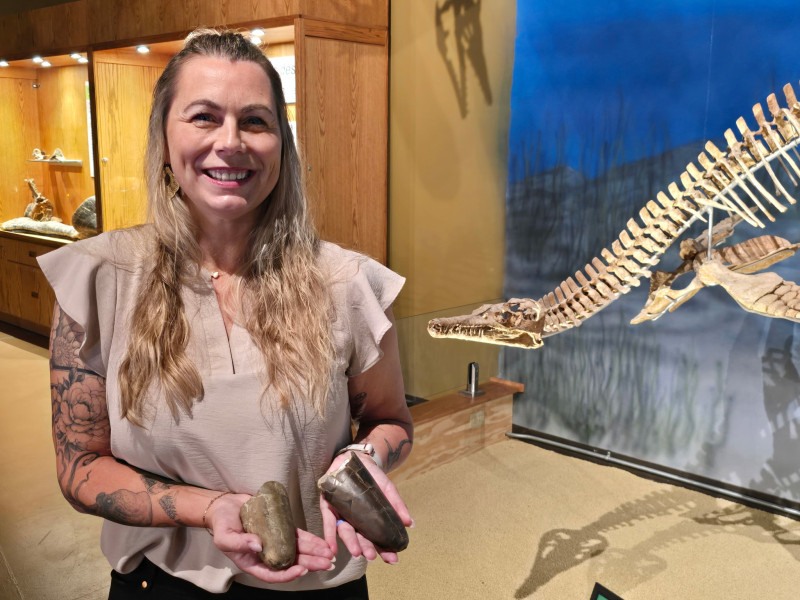
Wyoteuthis means a squid from Wyoming. The species name, linsterorum, honours Cliff Linster and his family. Linster died in June 2026 before the formal publication, although he knew his discovery was being studied. Both specimens are displayed at the Wyoming Dinosaur Center in Thermopolis.
The surprise is an exceptionally unusual member of a familiar fossil group, recognised in rocks people had searched for generations—with one crucial clue sitting quietly in a museum drawer.