Bleached corals recovered after touching healthy clones—in a lab.
Five connected fragments recovered in seven weeks; five separated comparisons died. The small study opens a research path, not a reef-wide cure.
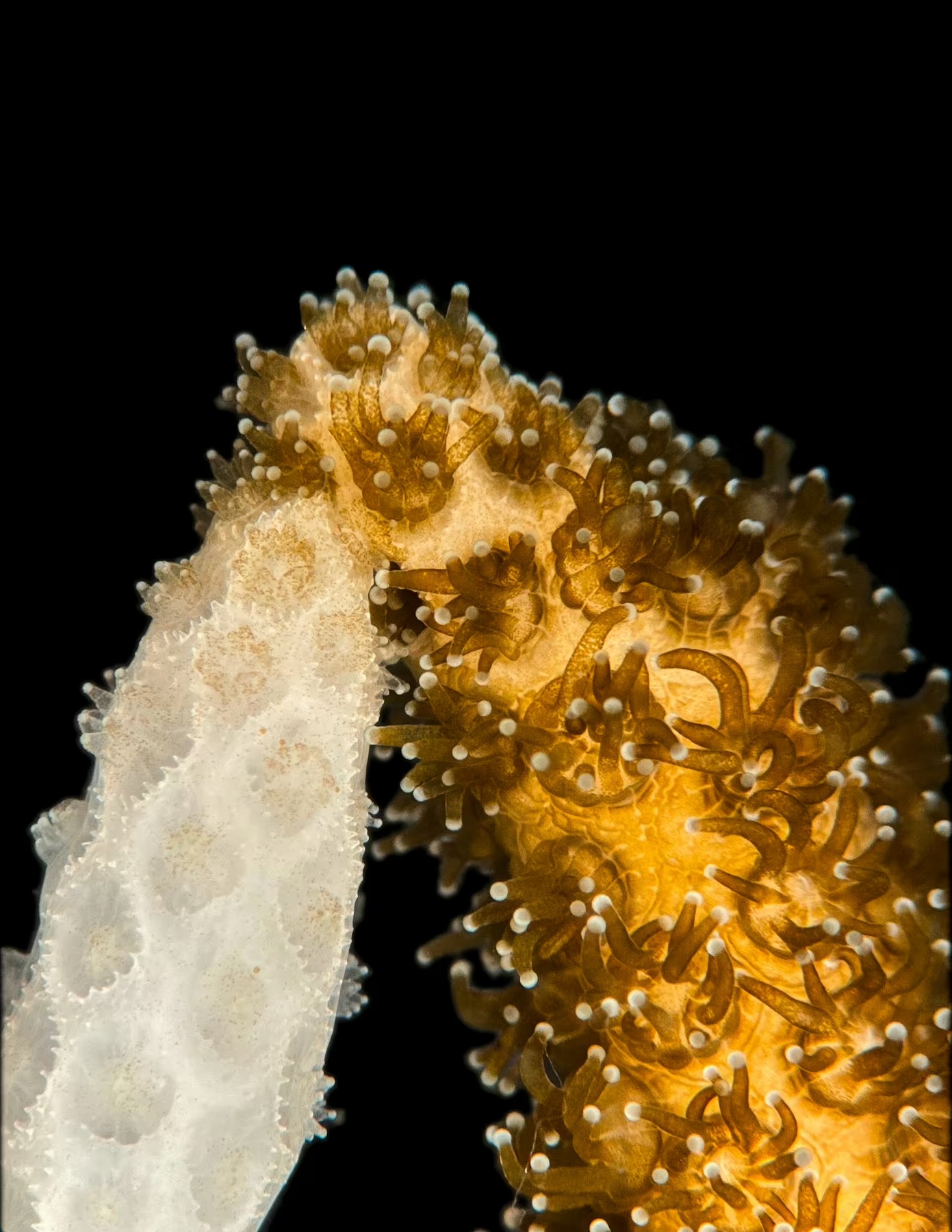
A bleached coral fragment can look as if life has drained from it. In a small Stanford laboratory experiment, some recovered after a surprisingly simple intervention: being placed in direct contact with a healthy fragment from the same genetic colony.
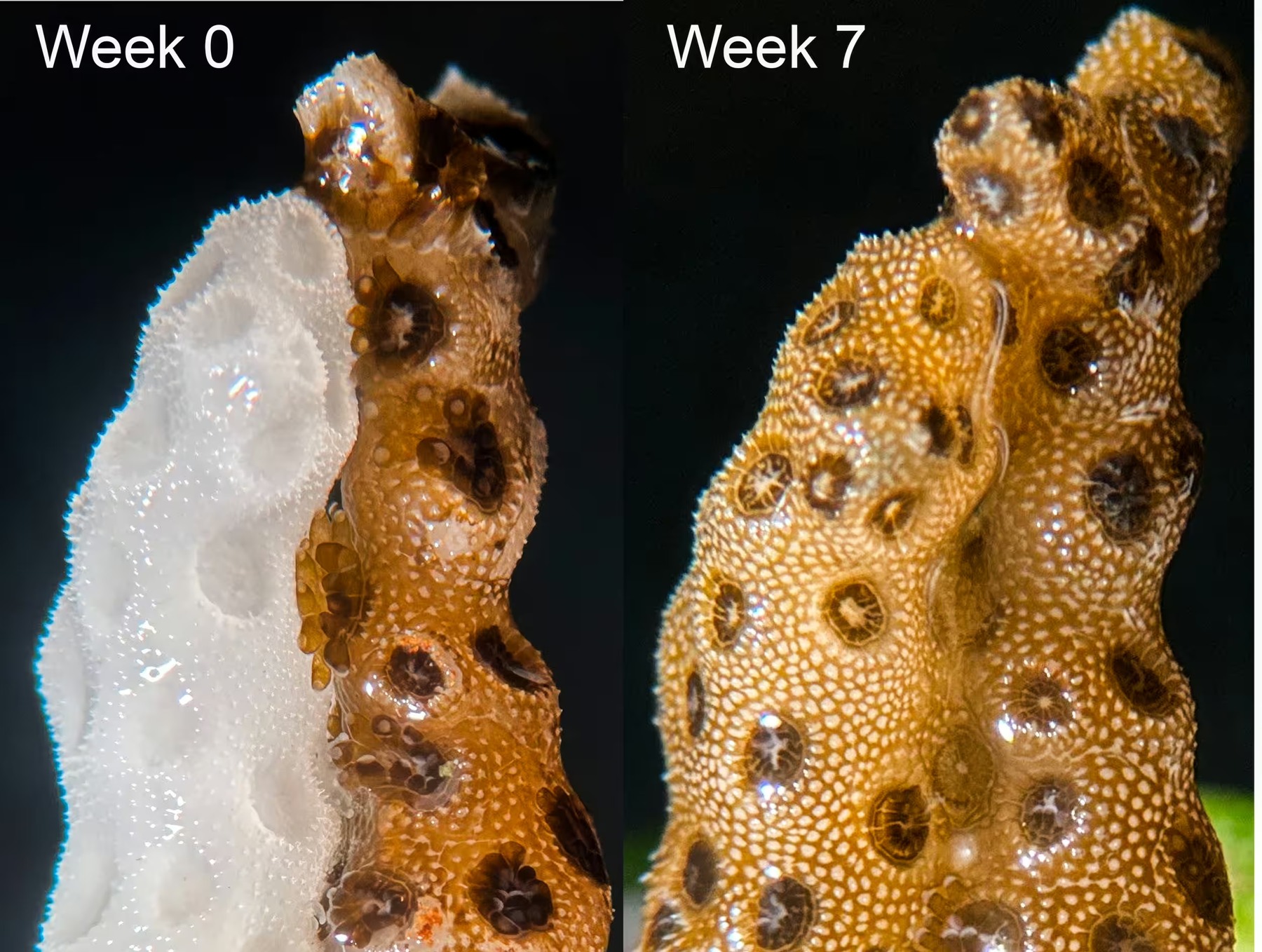
The study found that connected fragments could share beneficial algae and nutrients through fused tissue. All five bleached fragments placed in contact with their healthy counterparts recovered over seven weeks. Five comparison fragments kept only a few millimetres away did not recover and died.
It is an arresting result, not a cure already rolled out across the world’s reefs. The experiment was small, conducted in controlled conditions and dependent on genetically identical partners. Those limits are central to understanding what the scientists have—and have not—shown.
The important difference was touch
Researchers worked with ten pairs of healthy and bleached fragments. Half the pairs were allowed to make contact; the other half were separated by a small gap. That design helped distinguish the effect of physical connection from simply sharing nearby water.
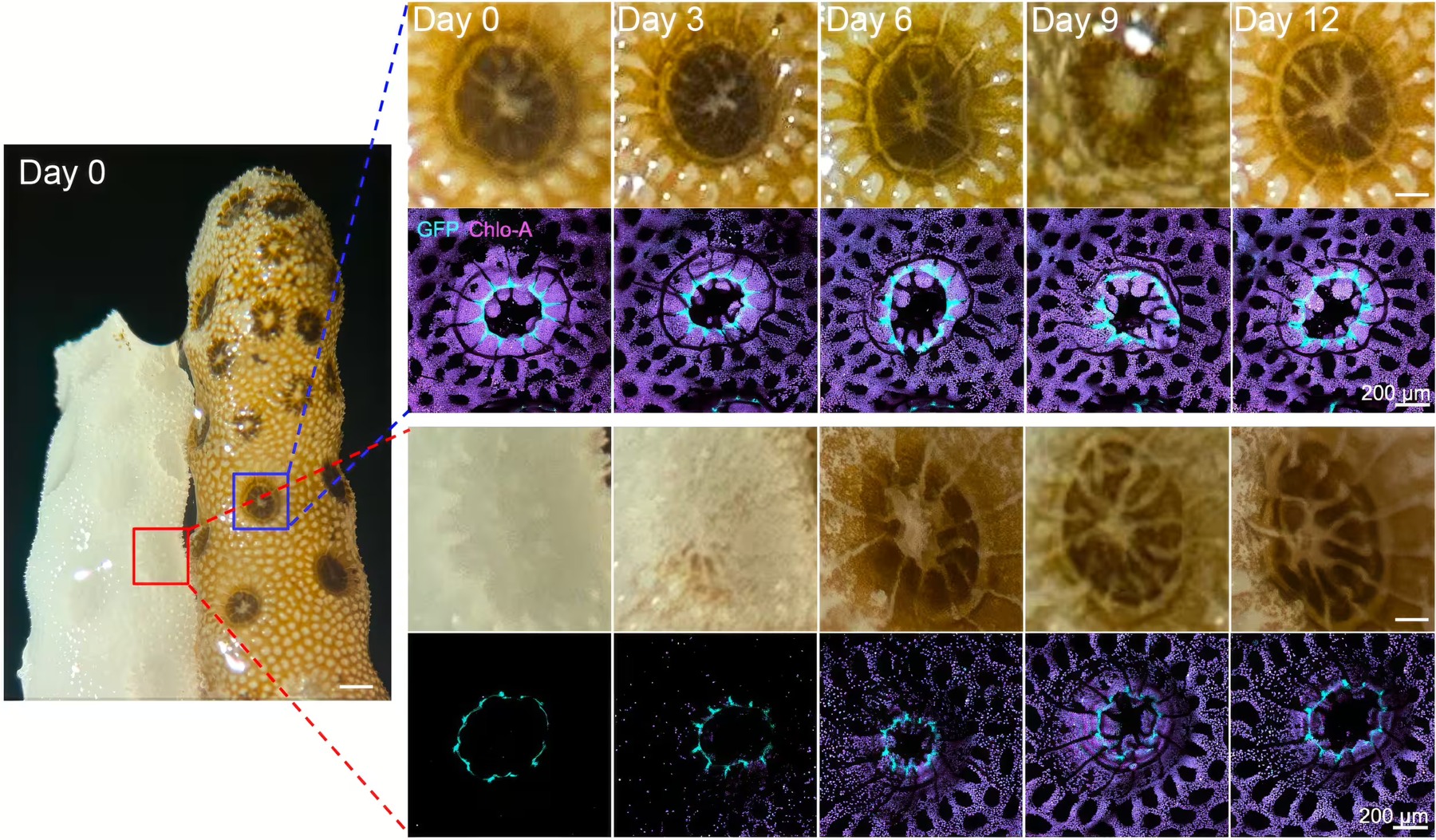
In the connected pairs, tissues fused and tiny channels aligned. That created a route for the exchange of algae and nutrients. The team observed beneficial algae moving into the bleached partner within three days.
Around a week of contact was sufficient to support recovery, with some fragments needing only five days. Full recovery in the laboratory took seven weeks. The immediate transfer and the eventual return to health are different stages; the study did not show that an entire bleached colony becomes fully healthy in three days.
Corals are animals with microscopic partners
The colours and productivity of many reef-building corals depend heavily on algae living within their tissues. The algae use light to produce energy and share resources with their hosts.
Under stress, including excessive heat, that partnership can break down. The coral loses much of its colour, producing the familiar bleached appearance. Bleaching does not always mean immediate death, but losing the algae’s support can leave the animal in a dangerous energy deficit.
That explains why transferring living algal partners is potentially important. The experiment was not a paint-like change in appearance. It investigated the restoration of a biological relationship on which coral health depends.
An accidental observation became a controlled experiment
Stanford’s account describes an initial observation in Steve Palumbi’s laboratory in 2025, when coral fragments came into contact. Danny Collins, a doctoral researcher in oceans, pursued the phenomenon with colleagues.
The resulting work, published in Science Advances on October 14, examined how those connections formed and how material moved between fragments. The research imagery includes before-and-after comparisons and microscopy tracing the transfer process, rather than only a photograph of a colourful reef.
The algae multiplied rapidly after transfer. Stanford reports that growth in the second week was far faster than the wild comparison rate discussed by the researchers. That is a finding within this experimental system, not a promise that every species or reef would respond at the same speed.
The reef-scale questions are still substantial
Genetically identical fragments can recognise and fuse with each other. A diverse reef is not simply a collection of interchangeable pieces that can all be pressed together. Researchers still have to work out which approaches are practical, safe and effective beyond the laboratory.
The team is exploring other possibilities, including collecting algae ahead of a heatwave and developing methods of delivering them to corals. Those are research directions, not a treatment already available for mass use.
Recovery also does not remove the cause of the original stress. Repeated marine heatwaves, disease and other environmental pressures can damage a coral again. A technique that helps an individual recover and the work needed to protect an entire ecosystem are complementary, not competing, tasks.
A reason for interest without a false happy ending
The most exciting aspect of the study is that a living connection appeared to restore something a stressed animal had lost. The stark difference between the touching and separated groups gives scientists a mechanism worth investigating further.
The right takeaway is not to handle wild corals or improvise reef transplants. It is that a carefully documented laboratory result has opened another line of work in coral recovery. Five successes cannot stand in for the world’s reefs—but they can give researchers a much more specific question to test next.