Scientists reset cell clocks by 60 years—in a lab, not in people.
Blood-derived cells acquired a much younger molecular age during conversion to neural stem cells. That is not a human age-reversal treatment.
Cells taken from an 80-year-old person ended up with a molecular age of less than 20 in a Bonn laboratory. Nobody’s birthday changed. What shifted was the age estimated by molecular clocks as the cells were reprogrammed into a different kind of stem cell.
Researchers at the University Hospital of Bonn and the University of Bonn directly converted red blood cell precursors into induced neural stem cells, which can give rise to nerve cells. Their study, described by the university on October 9 and published in Aging Cell, follows a striking reset in the cells’ epigenetic age during that process.
The result is a window into how cellular rejuvenation works. It is not a demonstration that scientists can make an 80-year-old person 20, reverse ageing throughout a human body or offer a treatment for Alzheimer’s disease.
The age being measured
An epigenetic clock estimates age using patterns of chemical modifications associated with ageing. Those patterns affect how genetic instructions are used without rewriting the underlying DNA sequence. A cell’s estimated molecular age is therefore different from its donor’s chronological age.
This distinction is essential to interpreting the experiment. The researchers were following changes inside cells grown and manipulated in a laboratory. They were not measuring a patient becoming younger, a longer human lifespan or a reduced risk of disease after treatment.
The university reports that cells from an 80-year-old donor displayed a molecular age below 20 after conversion. Oliver Brüstle, director of the Institute of Reconstructive Neurobiology at the University Hospital of Bonn, also says the rejuvenated cells behave like young cells. That is the researchers’ assessment of their laboratory model, not evidence of whole-body rejuvenation.
Changing a cell’s career path
The work begins with red blood cell precursors, not mature neurons collected from an elderly brain. A combination of transcription factors changes how the cells read their genetic instructions, steering them toward a neural stem-cell identity.
Cell reprogramming itself is not new. A familiar route first creates pluripotent stem cells, which can develop into many different cell types, and then guides them toward neural stem cells. Rejuvenation can happen quickly along that two-step route.
The Bonn approach bypasses the pluripotent stage. Blood-cell precursors are converted directly into neural stem cells. In this experiment, the reset unfolded gradually and could be followed for more than 100 days. The university describes a reduction of roughly 60 years in molecular age after about 50 days.
That slower pace is useful. Instead of seeing only a before-and-after contrast, researchers have a longer period in which to examine what accompanies the clock reset and how different conditions might alter it.
Why a slower reset is interesting
Brüstle’s team sees the model as a way to investigate factors and substances that might speed up or slow down cellular rejuvenation. Following the process over weeks could help separate changes that occur together from changes that actually help drive it.
The neuroscience connection is important because age is a major risk factor for neurodegenerative disease. A controllable laboratory model could help researchers ask questions about age-related cell behaviour. But usefulness as a research tool does not automatically establish usefulness as a therapy.
Earlier Bonn work showed that neurons produced through this general approach could form connections with existing neurons after transplantation into mouse brains. The university distinguishes that earlier finding from the current study’s focus on rejuvenation. It should not be mistaken for a successful transplant trial in people.
What the pictures actually show
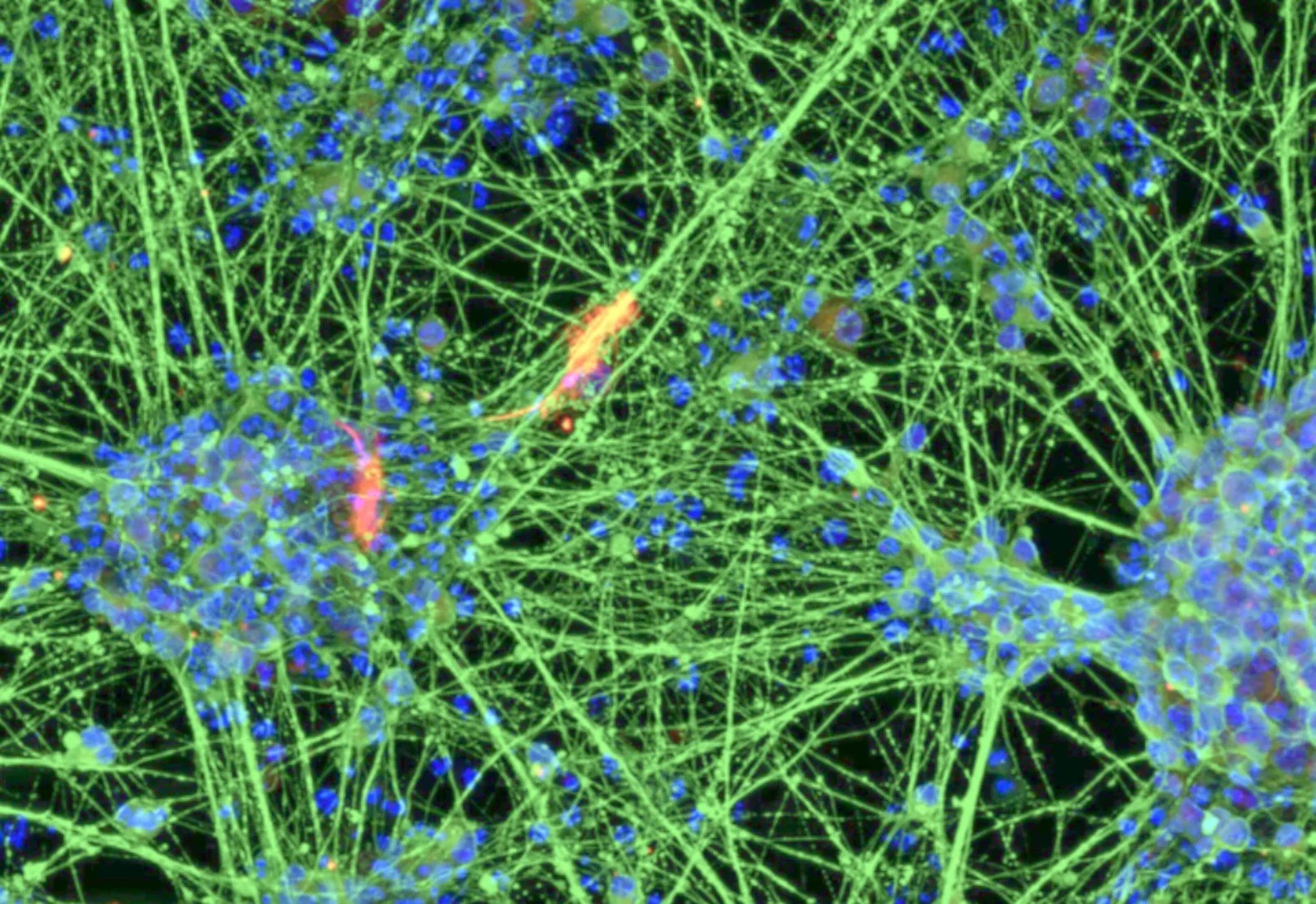
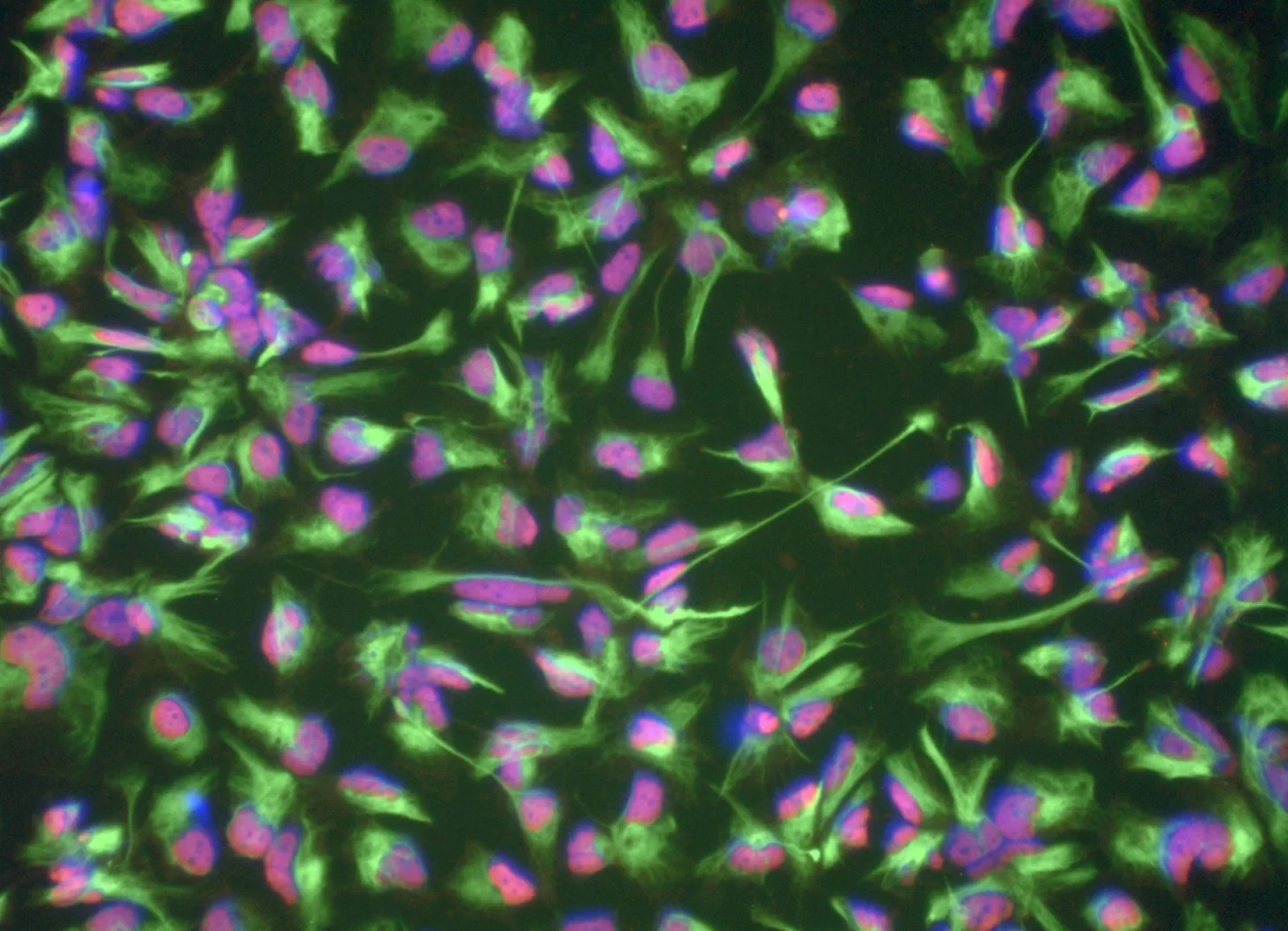
The images supplied with the university’s announcement are research microscopy, not generic stock photographs. One shows neurons generated by differentiating blood-derived induced neural stem cells. Another shows induced neural stem cells derived from blood cells donated by a 101-year-old person.
That second image is a separate example from the 80-year-old donor used in the headline result. It does not show a 101-year-old patient receiving treatment or prove that the same numerical reset occurred in every pictured cell. Keeping the captions attached prevents an arresting image from turning into a different claim.
The published work involved groups in Bonn and at RWTH Aachen University. Its immediate contribution is a model in which scientists can watch molecular age change during a cell-identity transition. Whether that knowledge can eventually support safe treatments remains a further research question.
The laboratory finding is impressive enough without a miracle attached: researchers have a way to observe a large cellular clock reset slowly, rather than simply discovering that it has already happened. The next challenge is understanding the mechanism—not marketing it as an age-reversal service.