AI’s next big battle in India: who gets the water and power?
A proposed national policy faces a local test as communities question resource access around major data-center projects.
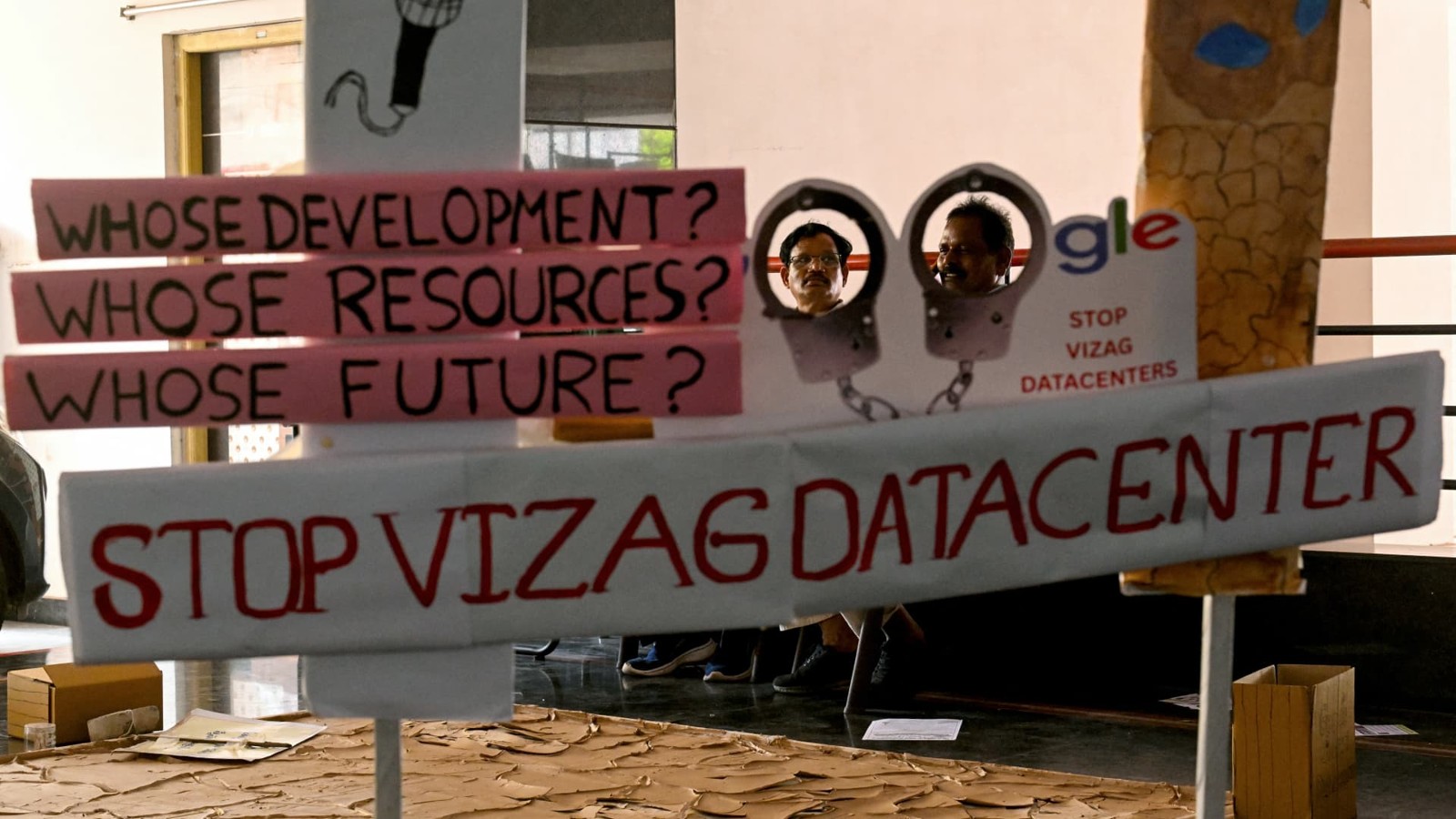
India's race to build the infrastructure behind artificial intelligence is running into a question that reaches far beyond the technology industry: who gets the water and electricity when demand rises?
A proposed national data-center policy is taking shape as local resistance grows around major projects. Residents and campaigners are challenging how scarce resources will be allocated, while developers want clearer rules for investments that take years to plan and build.
The dispute is not simply over whether India should attract more digital infrastructure. It is over where that infrastructure belongs, what developers must prove before construction and whether nearby communities will be protected when supply is tight.
The investment boom meets a local-resource test
Google's $15 billion AI and data-center project in Visakhapatnam has become a focal point for environmental opposition. Campaigners there have demanded that permissions for data centers be cancelled. Near Mumbai, residents have also raised concerns about an Amazon facility, including whether it could receive priority access to water and electricity during shortages.
Those concerns do not establish that either company has diverted household supplies. They do, however, explain why investment announcements alone are no longer settling the argument. For a household worried about water availability or electricity costs, the relevant question is not the size of an announced investment but what happens to the local system once a large facility starts operating.
Jitin Prasada, India's junior minister for electronics and information technology, announced plans for a data-center policy on October 14. He said the country wanted to avoid consumers paying more for power because of competition with data centers, according to reporting cited by CNBC.
The policy is proposed, not a completed nationwide settlement of the disputes. Its eventual requirements, and how they are enforced by states, will matter more than the announcement itself.
Amazon disputes the premise of the supply concerns
Amazon told CNBC its data centers do not use water for cooling and do not draw electricity from the local distribution network supplying homes, shops and businesses. The company said it was engaging communities through educational sessions and would participate in government consultations on data-center regulations.
That response is central to understanding the story. Residents' fears about future shortages are not the same thing as a verified finding that Amazon is taking water or power away from them. The company's account and the local objections need to be assessed against project-specific infrastructure plans, rather than treated as interchangeable claims about every data center.
Google did not respond to CNBC's request for comment. That absence should not be read as an admission about resource use. It leaves questions for the company and the authorities approving its project.
A government framework asks for proof before approval
A new evaluation framework from NITI Aayog's Frontier Tech Hub offers states a way to examine proposals before investment outpaces infrastructure. It links approvals to the readiness of power, water, land and supporting systems, while asking governments to protect existing users and assess measurable economic value.
On electricity, the framework calls for a jointly validated plan covering the full campus, not just its first phase. Developers and electricity authorities would identify demand, planned capacity, substations, transmission upgrades, delivery dates and responsibility for those upgrades. The central issue is whether promised supply will actually be available as the project expands.
For water, it calls for long-term assessment of surface water, groundwater and treated supplies, taking account of drinking water, irrigation, ecological needs and other users. It also says recycled or non-potable supplies should only be counted when they are contracted, connected and available from commissioning.
That distinction closes an obvious gap between an attractive plan and an operating facility: a future promise to recycle water is not equivalent to having a working supply on opening day.
The location decision could determine the outcome
The framework also asks for forward-looking assessment of flood, cyclone, heat, coastal and other risks. For large campuses where warranted, a community-impact assessment would accompany the site-readiness record. It encourages governments to identify suitable zones with verified land, electricity, water and connectivity rather than discovering bottlenecks after approval.
Experts interviewed by CNBC described a shift from mainly encouraging investment toward balancing investment with infrastructure readiness and sustainability. They also pointed to the fragmented approval process: states have their own rules and incentives, while regional authorities make the decisions about access to land and resources.
Clearer rules could therefore help both residents and developers. Communities would gain specific commitments they can examine; investors would gain a more predictable route through approvals. Neither benefit follows automatically from a policy document. Delivery milestones, cost-sharing and verification would still have to work in practice.
What to watch next
The next meaningful developments are the policy's detailed terms, state-level implementation and the evidence released for individual projects. Questions about electricity connections, cooling methods, seasonal water availability and who pays for upgrades cannot be answered by a national investment total.
India is seeking the economic benefits of an AI infrastructure boom. The emerging test is whether it can secure those benefits without asking surrounding communities to accept infrastructure promises they cannot verify.