A banana is a berry. A strawberry is not. Here is the botanical reason.
Kitchen names describe how we eat fruit. Botanical categories describe how a flower develops.
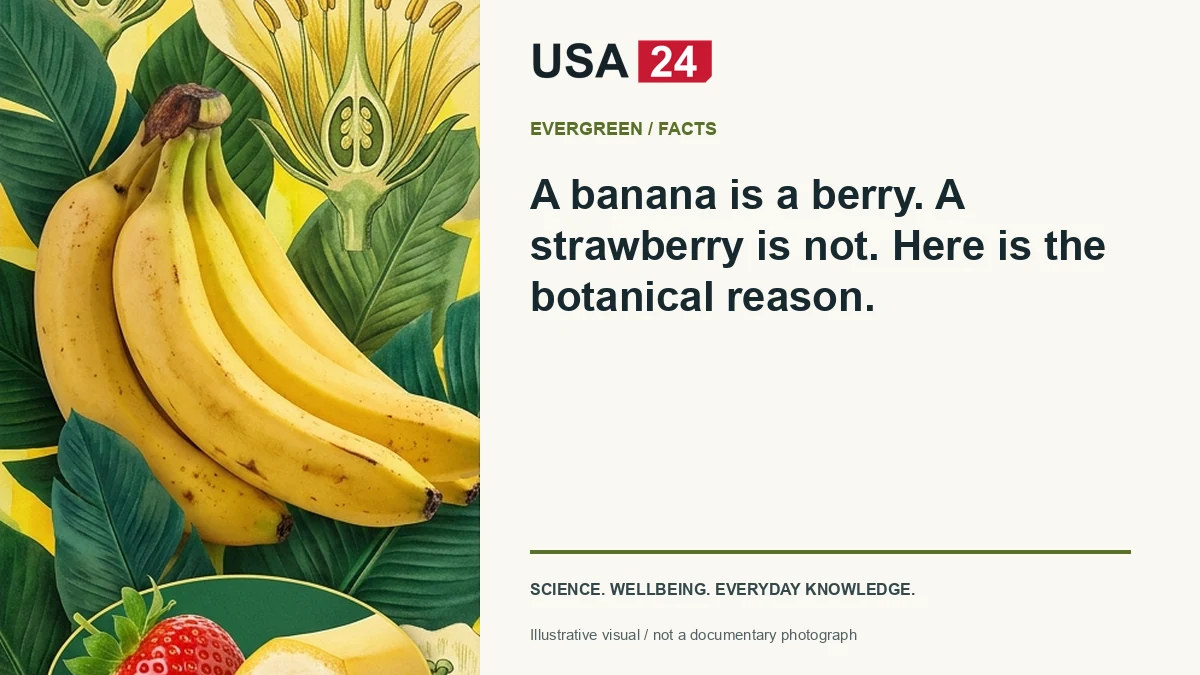
Calling a banana a berry sounds like a trick question. It becomes less strange once you realize that everyday food names and botanical classifications are answering different questions.
The flower comes before the label
Stanford Magazine explains that botanists identify a fruit by its development from the ovary of a flowering plant. Categories within that broad definition depend on which flower structures become the skin, flesh and seed-bearing parts.
A botanical berry develops from a single ovary and has a fleshy fruit structure. Bananas fit that category. So do some foods that would rarely be placed in a supermarket’s berry display.
Why strawberries fail the berry test
Strawberries and raspberries develop from flowers with multiple ovaries, rather than fitting the same single-ovary pattern. They are classified as aggregate fruits rather than true botanical berries.
The red, juicy portion of a strawberry also involves tissue outside the ovary. That is one reason it is useful to look at fruit development instead of deciding by color, size or sweetness.
Nobody needs to rename dessert
In a kitchen, a berry is a practical everyday word. In botany, it is a technical category. Both usages can work in their own context without a chef or a scientist being confused.
The surprise is not that the familiar name is forbidden. It is that a flower’s development can reveal relationships that a shopping basket hides. Next time a food fact seems impossible, ask which definition is being used.